Wedding Planner Question: How Do I Handle Back to Back Weddings and Rehearsals?
Receiving this question took me straight back to 2020 Jes. Hustle-era Jes. The version of me who said yes to everything, did things way outside the normal scope of a wedding planner, carried way too much, and stacked back to back weddings because that’s what building looked like at the time.
She was incredible.
She was also exhausted. By the end of that season, she was completely fried.
There was demand, I wasn’t charging enough not to stack my calendar, and I wanted to be the planner who could handle it all. And for a while, I did. Until I realized how much risk I was carrying and how thin my margin for error had become.
That season taught me a lot. But it also taught me what I never want my business to look like again.
Before I tell you how I made it work, because it sounds like you’re in it right now and this is not the moment to restructure, it’s the moment to survive it… let me tell you how that season ended.
It ended with me completely burnt out and taking on way more risk than I should have been. There were so many things that could have gone wrong with so little time between weddings and no room to fix them. That’s what people are paying you for not just the timelines and floor plans, they are paying you / YOU WERE HIRED to limit the risk and be there to fix.
Back to back weddings don’t just test your stamina. They test your professionalism.

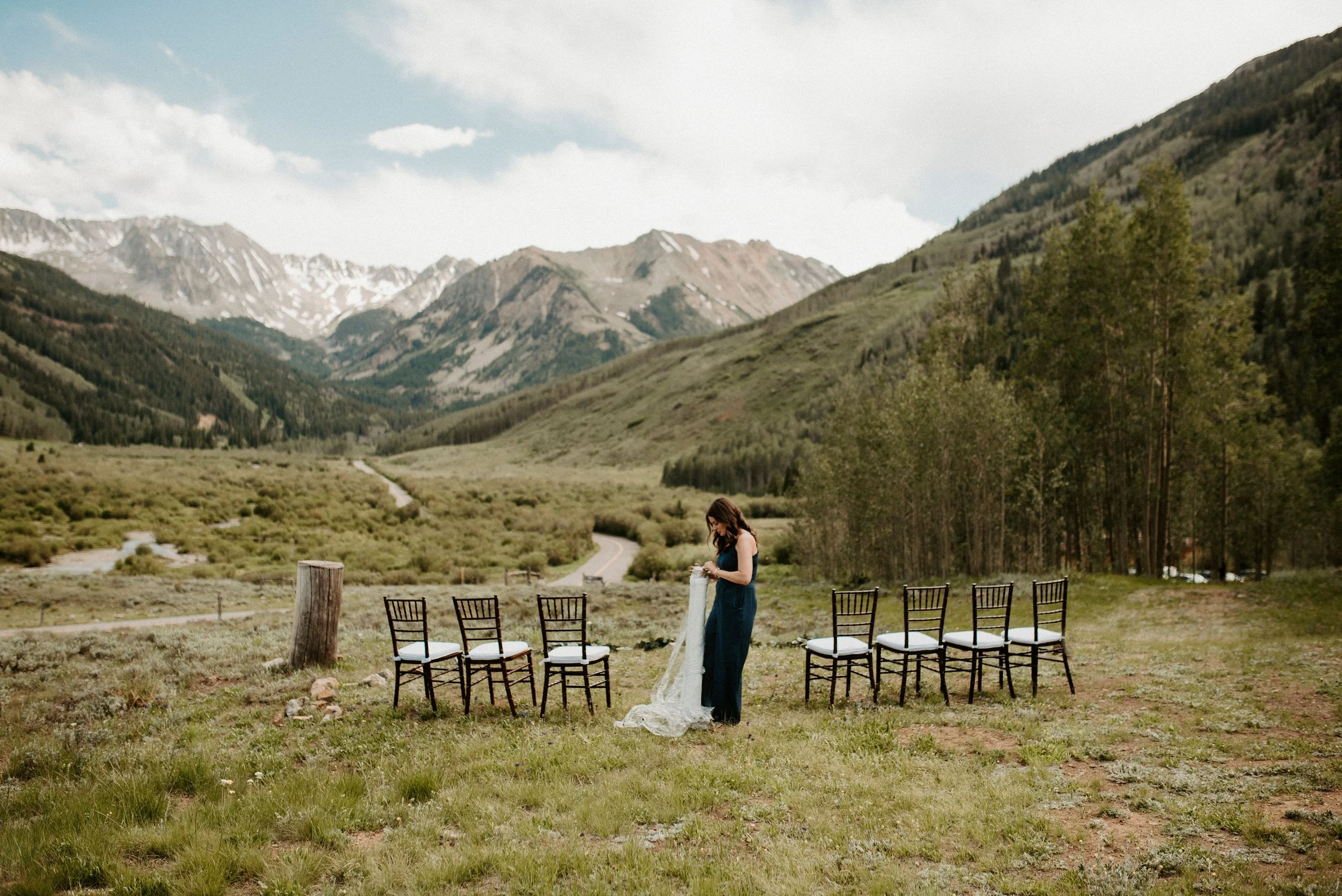
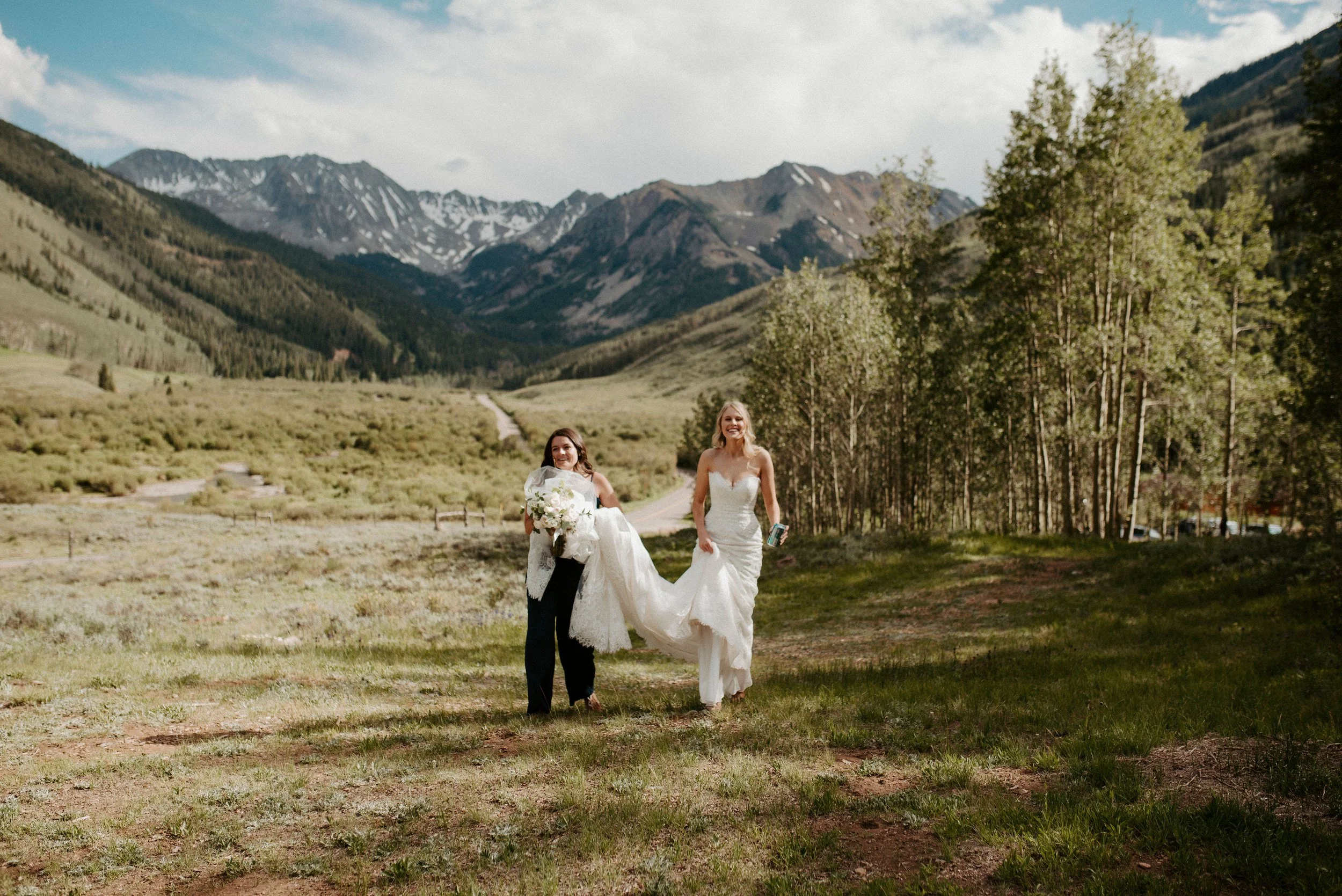
Here’s me in 2020. I set up this micro wedding carrying EVERYTHING through the woods, officiated AND served cake and champagne. Cool cool cool right?
The Real Risks of Back to Back Weddings
This is coming from experience and if you don’t take anything else from this blog, take this:
That “laid back” (don’t they all say that?), low guest count, should-be-easy couple almost always becomes the problem child wedding of the week. Every. Time.
It’s the couple with no opinions until suddenly they have all of them.
It’s the intimate wedding with big family dynamics.
It’s the backyard venue with no infrastructure and ten moving parts.
It’s the chill bride who becomes very not chill the week of.
The size of the guest list has nothing to do with the complexity of the wedding. And when you stack weddings, you don’t get to choose which one explodes.
Physical burnout and decision fatigue
The wedding hangover is real. You’re sore, dehydrated, running on adrenaline, and your brain is fried from making a thousand decisions the day before. You had too many hot Cheetos to cope with mom from wedding A and your fingers are stained.
There is no version of back to back weddings where you show up at 100 percent on day two.
If your weddings are on consecutive days, make the first wedding the easier one whenever possible. Then overstaff the second. Bring an extra assistant just for setup so you can buy yourself time to sleep, prep, eat real food, and mentally reset.
No margin for error
When weddings are stacked, your buffer disappears.
There’s no extra day to:
Replace whatever they forgot
Reprint signage
Track down missing table numbers
Wash your cake knife
Fix a timeline that imploded
Find a new X, Y, Z
You are working without a safety net. And weddings demand one.
No recovery time if something goes sideways
Chaos theory is very real in this job.
Your car breaks down between weddings.
You break your finger at wedding A and have no choice but to fix it yourself (can you tell this was my actual story? I stepped on it myself and taped it to a popsicle stick, no joke)
The officiant for wedding B cancels the day before. (Guess who officiated?)
A vendor shows up late.
A family situation erupts.
And you still have a wedding happening that day that deserves your full attention.
No buffer for client emergencies
When a bride texts you at 9pm the night before her wedding because her seating chart just changed, you don’t get to say sorry, I’m still breaking down yesterday’s wedding.
Clients don’t care that you’re double booked. They only care that it’s their wedding.
No space for your own life
No laundering your jumpsuit.
No home cooked meal.
No time with your person.
No downtime.
Just weddings, caffeine, and survival mode.
Doing this once or one season is one thing. Sometimes you have to hustle and I am HERE FOR IT! Doing it every weekend is how planners burn out and leave the industry.


How to Handle Rehearsals When You’re Already Booked Back to Back
If you’re already stacked and the contracts are signed, this is not the moment to panic. This is the moment to get really organized and really supported.
And let me say this first. If you’re doing back to back weddings without a team, that’s your sign. Not your failure. Your sign.
Learn from what I wish I had done, not what I actually did by trying to do it all myself. This is the season where you stop being a solo hustle hero and start building a little support around you. Even one extra set of hands changes everything.
These are the weddings you over-prepare for
Back to back weddings are not the ones you wing.
These are the weddings you:
Over prep
Over communicate
Over confirm
Over systemize
Not because anything is wrong, but because when your calendar is stacked, your margin for error is smaller. The more organized you are on the front end, the calmer your weekend will feel.
Schedule the harder rehearsal first
If one of your weddings is more complex, bigger guest count, more family dynamics, or just feels like it needs more hand-holding, schedule that rehearsal earlier in the week whenever possible.
Do the harder one while your brain is fresh and your patience is fully stocked.
How to frame it to your client:
To keep your wedding week feeling calm and unrushed, I recommend we schedule your rehearsal earlier in the week. That gives us plenty of time to walk through everything and answer questions before the weekend arrives.
Move rehearsals earlier when you can
If your weddings are Friday and Saturday, try not to stack both rehearsals on Thursday night.
If the venue allows it, move one to Wednesday. Even buying yourself 24 extra hours gives you breathing room to reset and prep.
How to frame it to your client:
When we’re able to move rehearsals earlier in the week, it keeps the day before your wedding relaxed and low stress so you’re not juggling last-minute logistics and rehearsal all in the same evening.
This is where having support changes everything
If you have a lead coordinator or assistant you trust, let them run one of the rehearsals on wedding A’s day while you’re focused on executing that wedding.
You do not need to be everywhere to be a great planner. You need systems and support that keep everything running smoothly.
How to frame it to your client:
I work with a lead coordinator on my team who will be there to run your rehearsal so you’re fully supported and everyone feels confident heading into the wedding day.
Your 72-hour check-in
About three days before your first rehearsal, reach out to both couples for a friendly final check-in.
This is not a scary email. It’s a warm, confidence-building “we’re in great shape” message.
You’re confirming:
Rehearsal date, time, and location
Who should attend
What to bring
How to frame it to your client:
I always send a final check-in a few days before rehearsal so everyone knows exactly what to expect and can come feeling relaxed and prepared.
At rehearsal, I’ll introduce myself, hand out timelines, get everyone lined up, and walk through the processional and how we’ll get started. We won’t run full ceremony wording, just the flow so everyone feels confident. We’ll walk through it once, then again, then one last time so it feels easy.
Before I head out, I’ll also grab any decor or signage, your marriage license, and vendor thank you notes with gratuities.
This usually takes about 45 minutes to an hour and then everyone is free to go enjoy their night.
Systemize everything so you can breathe
These are the weekends where you want to trust your systems.
Have timelines finalized and sent. Vendor contacts printed and saved. Load-in schedules confirmed. Rain plans reviewed.
Not because you expect chaos, but because you deserve a weekend where you can focus on your couples instead of hunting for information.

If You’re Stacking Weddings, Your Pricing Is Telling You Something
Here’s the part most planners don’t want to admit.
If you’re consistently booking back to back weddings, especially season after season, it’s usually not because you love being busy. It’s because your pricing requires it.
You’re stacking because you need the revenue.
You’re saying yes because your margins are thin.
You’re filling every open date because you can’t afford not to.
That hustle era makes sense when you’re building. It’s part of the growth phase. But it’s not where your business should live forever.
There’s a version of hustle culture in this industry that glorifies exhaustion. The long weekends. The stacked calendars. The “I survived another season” post. *THIS WAS ME!
But surviving is not the goal.
When your pricing is right, you don’t need to destroy your body to hit your income goals.
You can:
Cap your monthly weddings
Build in buffer weekends
Pay for help without stressing
Say no without panicking
Raising your prices doesn’t mean you book fewer weddings. It means you book better ones.
Better budgets.
Better venues.
Better vendors.
Better communication.
And a much calmer calendar.
Your calendar is giving you feedback. And it’s worth listening to.
How to Design Your Business So Back to Back Weddings Become the Exception
Back to back weddings should not be your normal. They should be your once in a while, sure I can make that work.
If this keeps happening, it’s not a scheduling problem. It’s a planning problem. Business planning.
This is where you stop booking based on “is the date available?” and start booking with intention.
Start with a real yearly revenue goal
You need to know:
What you want to make this year
What that looks like monthly
What that looks like weekly
And what kind of workload you actually feel good about
My method was using a big, physical yearly calendar like this one:
https://amzn.to/4pB9qks
I’d write my monthly revenue goal at the top of each month. For example, maybe September needs to bring in $25k.
Then I’d break that down by what I realistically wanted to take on.
Maybe September looks like:
Two full planning clients
One month-of client
If a full planning client inquires for the week you earmarked for a month-of, move the month-of to another week.
You’re not just filling dates. You’re building a balanced workload.
Book with priority, not panic
Instead of:
Yes, I’m available.
You start thinking:
Is this the right type of wedding for this week?
Does this move me closer to my monthly goal?
Is this the level of client I want more of?
This is how you protect your energy and your income at the same time.
This only works if your pricing supports it
You need pricing that:
Covers your income goals
Pays for help when you need it
Allows buffer weeks
Supports your life
When your pricing is right, you get to choose.
Final Thoughts
Back to back weddings happen. Sometimes because the demand is there. Sometimes because the money makes sense. Sometimes because you’re building and saying yes to everything that comes your way and that dream client finally arrives.
But just because you can do it doesn’t mean you should design your business around it.
The real flex is building a calendar that feels intentional instead of chaotic. One that supports your income goals and your life at the same time.
If your current season feels unsustainable, that’s not failure. That’s feedback.
And it’s fixable.
If you want help building a business that makes great money without running you into the ground, that’s exactly what I do.
You deserve a business that works for you, not the other way around.
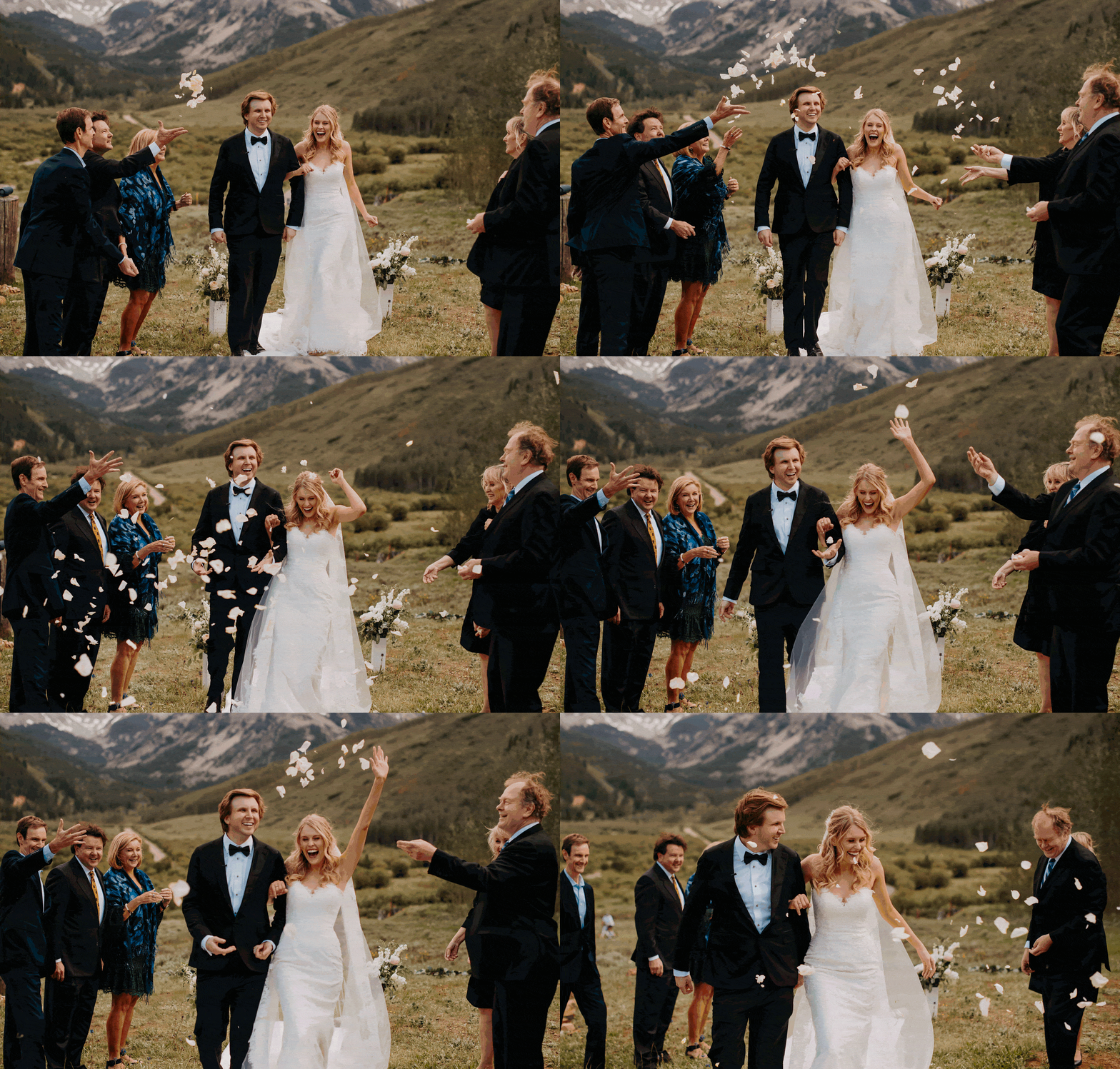
The results of all of my hustle - my first Rocky Mountain Bride feature.
Photos by the incredible Breelle Hilsenrath